 Calculate
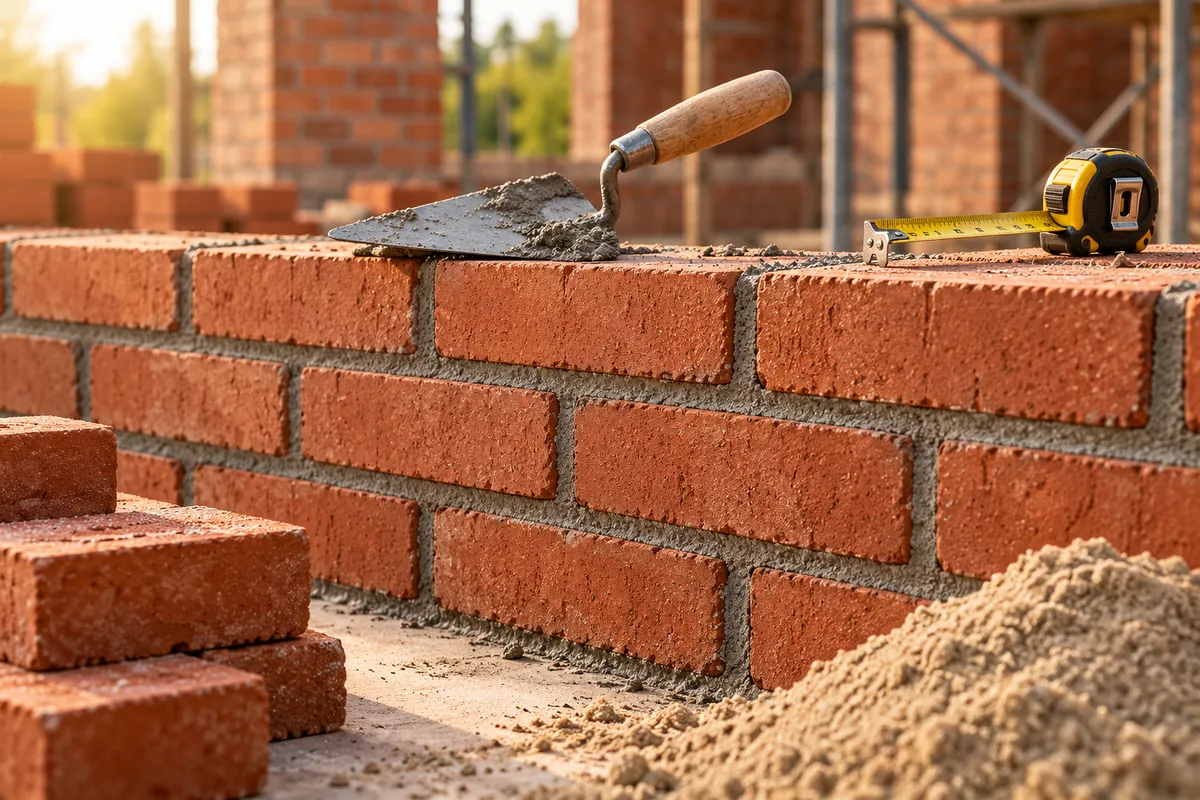
Why brick calculators disagree is often a question about assumptions rather than arithmetic. A wall-area shortcut, a modular brick method and a masonry-volume model can produce different counts because they describe the wall differently. This article demonstrates a volume model so readers can inspect each assumption. It does not establish one universal brick yield or decide which wall is structurally suitable.
Record the inputs before calculating
Measure wall length, height, actual thickness and openings in consistent units. Measure a sample of the bricks being bought. Ask whether quoted dimensions include joints. In a volume model, explicitly state the mortar-volume fraction; in a modular method, use an appropriate bonding arrangement and joint dimensions. Do not deduct a mortar fraction and also inflate brick dimensions for joints in the same model.
Worked example and formula
Illustrative numbers only. Replace every assumed measurement, price, rate and performance factor with evidence for your situation. A 2026 review date does not turn an example into a current market quotation.
10 ft × 8 ft − (2 ft × 3 ft) = 74 ft²
74 × (9 / 12) = 55.5 ft³
(9 × 4.5 × 3) / 1728 = 0.0703125 ft³/brick
55.5 × (1 − 0.25) / 0.0703125 = 592 bricks
ceil(592 × 1.05) = 622 bricks
The example assumes measured 9 × 4.5 × 3 inch bricks and an independently assumed 25% mortar-volume fraction. A 10 by 8 foot wall with a 2 by 3 foot opening has 55.5 cubic feet of masonry. This model gives 592 bricks before a separate 5% allowance and 622 after rounding. The fractions are illustrative, not a site specification or proof of an exact yield.
Interpret the result correctly
Count half bricks, cuts, returns and bond details appropriately rather than treating a volume estimate as a construction drawing. Openings cannot be removed twice. A nominal 9-inch wall may have a different finished thickness; plaster is separate from masonry. Manufacturer dimensions and project specifications should control, not an unexplained national default. Structural changes need the project engineer.
Keep the original measurements, source date, units and assumptions beside the result. Change one assumption at a time to see its effect. A comparison is meaningful only when both options use the same scope. Do not silently combine different test procedures, products, dates or fee bases. Round a purchasing quantity upward only after completing the calculation; retain enough precision for intermediate steps.
Frequently asked questions
Which measurements should I use?
Use measured brick and wall dimensions, verified opening sizes and one consistent estimating method.
Is the example a guaranteed result?
No. The 25% mortar assumption and 5% allowance are chosen for the example, not universal values.
What should I check before acting?
Check whether the tool uses area or volume, whether joints are included and which waste allowances it applies.
Use the result and related tools
Keep both calculations and compare inputs first. Use the established brickwork guide for mortar and unit handling; do not average conflicting answers without resolving their assumptions.
Sources and review scope
Reviewed 22 October 2026. The examples and arithmetic are original editorial illustrations, not field tests, certified designs, current price surveys or promised savings. Sources support the stated concepts; they do not certify these example inputs. The linked calculators have their own assumptions. These articles address specific decisions and complement the existing calculator guides. No Google search-volume or ranking claim is made.