 Calculate

A kitchen sink can smell bad even when the garbage disposal still runs. The source may be residue around the rubber splash guard, food caught in the chamber, a dirty drain or an issue farther down the plumbing. Here is a safe, low-chemical routine that addresses the likely cause instead of hiding it with fragrance.
The short answer
Turn the disposal off and disconnect its power before cleaning reachable areas. Remove loose food residue from the splash guard using manufacturer-approved methods and a cleaning brush, not your fingers in the chamber. Reassemble all parts before restoring power. Flush with water as recommended by the model’s manual. If odors return quickly, water backs up or leaks appear, look beyond the disposal and have the drain system checked.
Before you begin: Never put your hand inside the grinding chamber. Do not mix bleach with vinegar, ammonia or other cleaners. Avoid chemical drain openers in disposals unless the specific manufacturer expressly approves them.
First, identify the problem
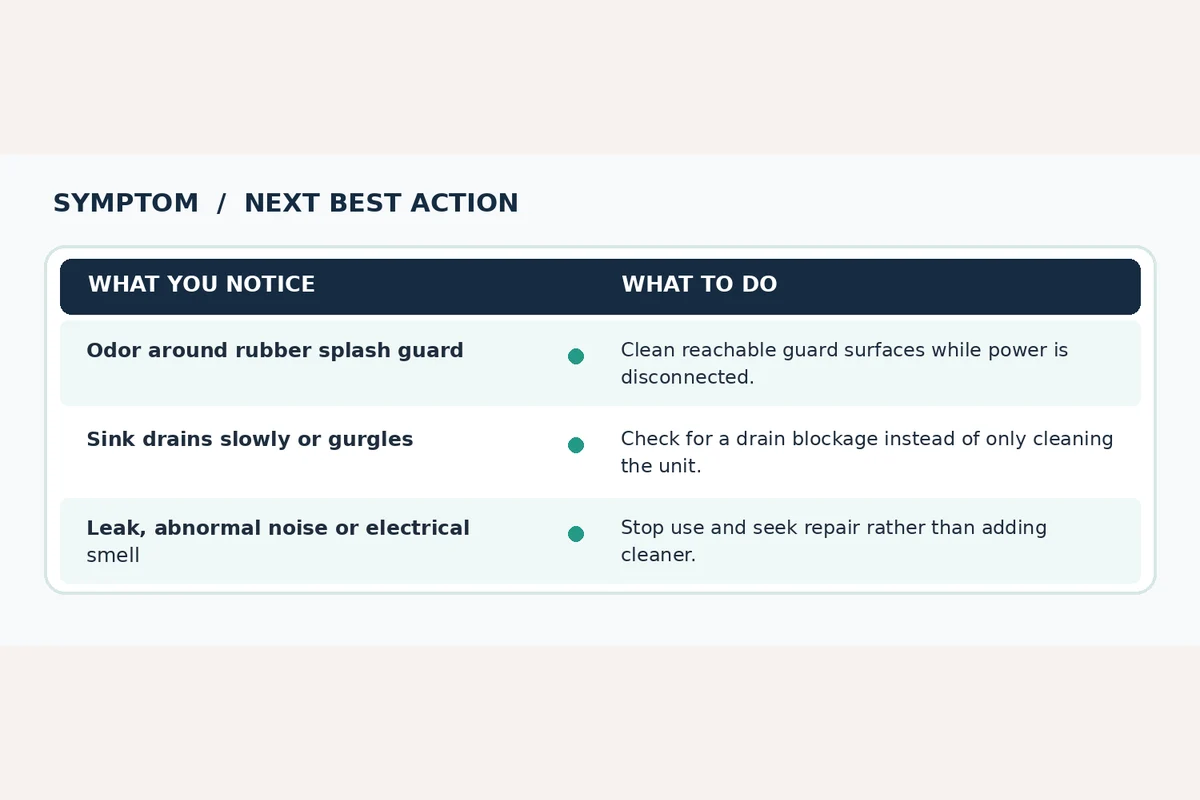
A smell is a symptom, not a diagnosis. Match the odor with what else is happening at the sink.
Step-by-step solution
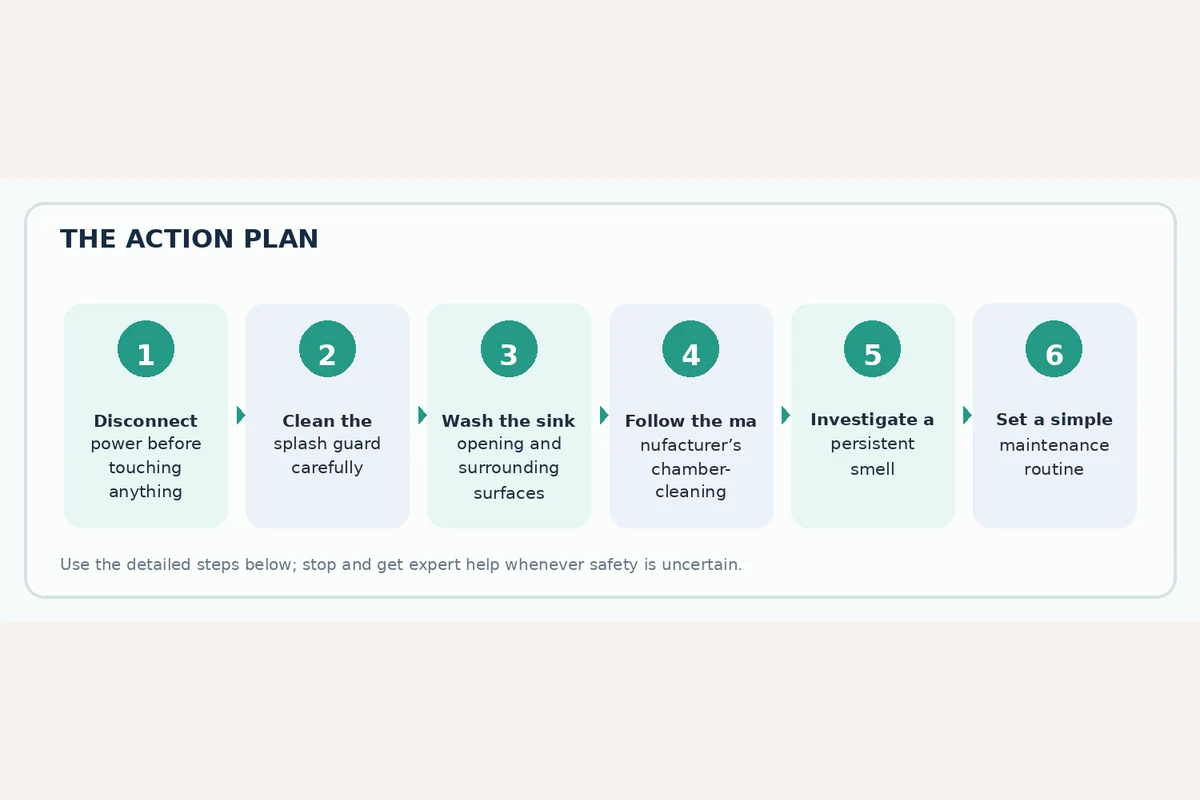
1. Disconnect power before touching anything
Turn the wall switch off. Unplug the disposal beneath the sink if the outlet is safely accessible, or isolate the circuit at the breaker if it is hardwired. Confirm that nobody can energize the unit during cleaning. Even when the motor is off, the grinding components can have sharp edges, so do not put hands into the opening. Use a flashlight to inspect the underside of the splash guard from above.
2. Clean the splash guard carefully
Grease and food film often collect on the underside of the rubber splash guard. Some models have removable guards; others must be cleaned in place. Follow the manual to determine whether yours can be removed and how. With power isolated, use a long-handled cleaning brush and mild detergent on accessible rubber surfaces. Rinse thoroughly and replace the guard correctly before reconnecting power.
3. Wash the sink opening and surrounding surfaces
Wipe the metal or composite sink flange, drain rim and nearby countertop with a cleaning product suitable for that surface. Use a soft brush to remove trapped residue from seams that are easily reached without entering the grinding chamber. Rinse with water and dry the surrounding surfaces. Pay attention to the sink strainer and any removable stopper: a clean disposal cannot eliminate odors coming from a dirty sink opening.
4. Follow the manufacturer’s chamber-cleaning method
Use the disposal maker’s approved cleaning routine. Many models can be flushed with cold water during normal operation after they are fully reassembled; follow the specified sequence and water flow. Avoid dumping large quantities of baking soda, vinegar, ice, citrus rinds or cleaning products simply because a viral tip recommends them. Household materials can be unsuitable for certain plumbing or septic configurations; the owner’s manual should take priority.
5. Investigate a persistent smell
If the odor returns within a day or two, consider other sources: trapped food under a guard, a dirty dishwasher drain connection, a partially blocked trap, or an issue with plumbing venting. If the sink is slow to drain, do not repeatedly run the disposal to push debris through. A plumber can inspect and clear the trap and downstream pipe safely. Sulfur-like or sewer-gas odors deserve prompt attention to the drain system.
6. Set a simple maintenance routine
After normal use, run water for the period recommended by your model’s instructions. Scrape plates into the trash or compost and avoid feeding large volumes of food waste through the unit. Wipe accessible sink and splash-guard surfaces during routine kitchen cleaning. If the home uses a septic system, the EPA recommends limiting garbage-disposal use because it increases solids entering the tank.
Common mistakes to avoid
- Putting a hand into the grinding chamber while cleaning.
- Mixing bleach with vinegar, ammonia or other household chemicals.
- Using strong drain cleaner to mask a smell or treat a blocked drain.
- Assuming all odor comes from the disposal when the trap or dishwasher connection may be involved.
- Sending grease, fibrous waste or large batches of scraps through the unit.
When to stop and get professional help
Contact a plumber if the sink repeatedly backs up, a sewer-like odor persists, there is a leak beneath the cabinet, the disposal housing is cracked or you suspect a blocked or improperly vented drain. Call an electrician for electrical faults or repeated protective-device trips.
Prevention and maintenance checklist
- Scrape large food scraps into compost or trash before rinsing plates.
- Clean reachable splash-guard surfaces regularly using the approved method.
- Avoid pouring oil and grease into the drain.
- Maintain the disposal according to its model manual.
- For septic systems, follow EPA guidance and limit ground food waste.
Frequently asked questions
Can I clean the disposal with baking soda and vinegar?
That mixture is popular online, but it is not a substitute for cleaning food film or clearing a drain obstruction. Follow the model manufacturer’s cleaning instructions instead.
Can I use bleach to remove the odor?
Do not mix bleach with acids or ammonia, and do not use strong chemicals in a disposal unless the manufacturer specifically approves them. A mild, model-approved clean is usually preferable.
Why does the sink smell even after cleaning?
Odors may come from the splash guard, dishwasher drain connection, trap, venting or a partial blockage. Persistent sewer-like smells warrant plumbing assessment.
How often should I clean it?
There is no universal interval. Clean accessible surfaces when residue develops and follow the manufacturer’s recommended maintenance; household use patterns differ.
What to do next
Start with the splash guard and sink rim, then reassess the odor after a day of normal use. If slow drainage or odors persist, investigate the plumbing rather than repeatedly adding stronger cleaners.
References and further reading
These primary sources support the safety, consumer-protection, or platform guidance in this article. Verify product manuals and local rules before acting.
- EPA: how to care for your septic system
- EPA: SepticSmart, Think at the Sink
- InSinkErator: owner support and product guides
Editorial note: General U.S. information, not individualized professional advice. Product models and local codes may differ. Images are original explanatory illustrations, not photographs of a specific product or job.