 Calculate
You flip the switch and the garbage disposal hums, clicks, leaks—or does nothing at all. Before paying for a replacement, use this simple decision process to identify what failed, what you can safely check yourself, and which warning signs mean it is time to call a qualified professional.
The short answer
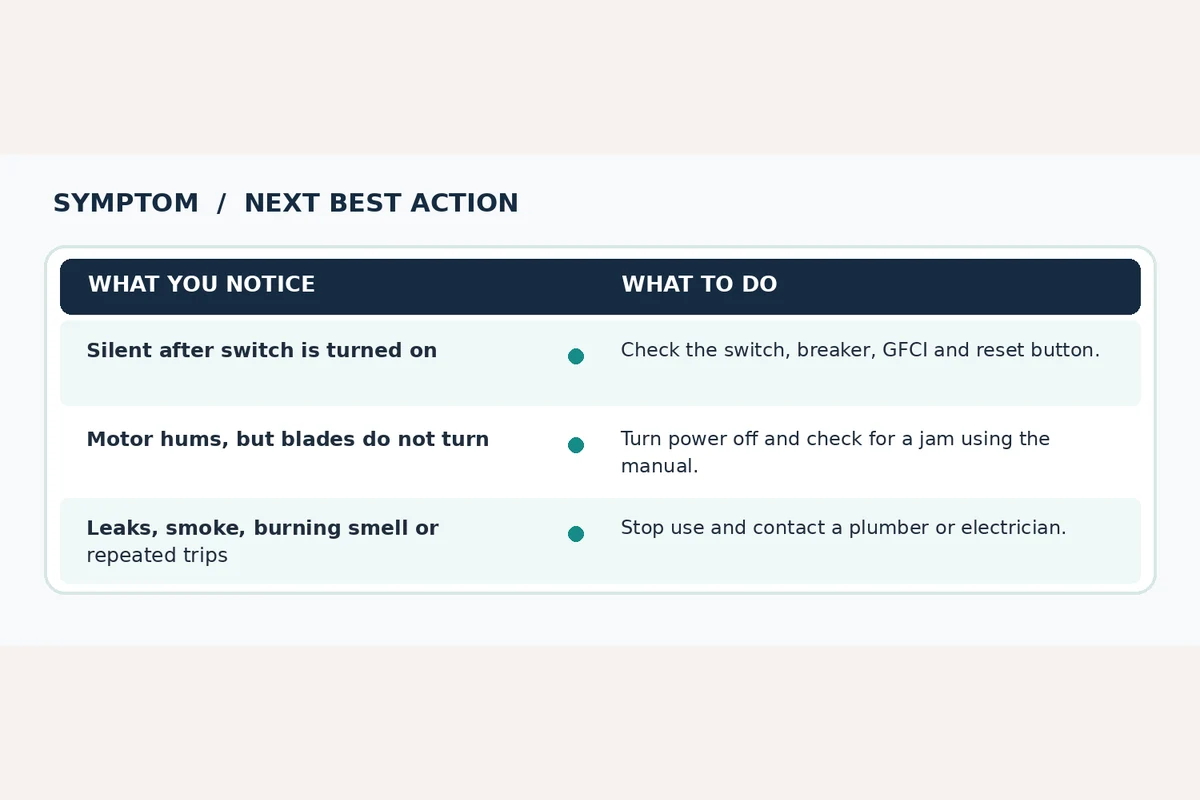
Start by turning the switch off. If the unit is completely silent, check the circuit breaker, GFCI outlet where applicable, and the manufacturer’s reset button. If it hums but does not spin, a jam is possible; disconnect power before using the manufacturer-approved wrench or jam-clearing method. If water leaks, electrical parts get wet, or the unit trips power repeatedly, stop and request service. Never put a hand into the grinding chamber.
Before you begin: Do not insert fingers or tools into the opening while power is connected. For any work near the grinding mechanism, switch off the circuit and disconnect the plug or otherwise isolate power following the owner’s manual. Do not bypass a protective device.
First, identify the problem
The sound the disposal makes is more informative than its age. Compare the exact symptom with the recommended first action below before removing any parts.
Step-by-step solution
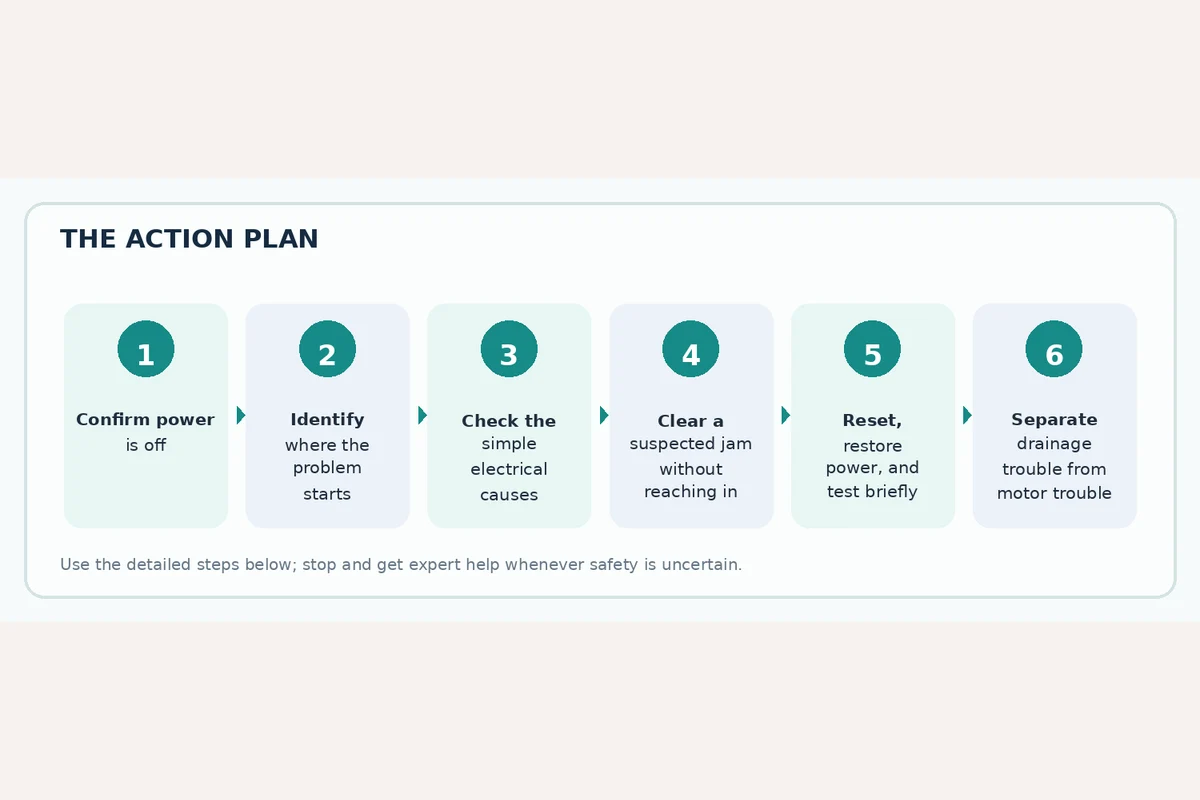
1. Confirm power is off
Put the wall switch in the off position. Find the disposal plug under the sink and unplug it if accessible; for hardwired units, isolate the circuit at the breaker. Ask everyone in the home not to use the switch while you are inspecting the unit. Put a flashlight near the opening rather than reaching inside. If any electrical connection looks wet, do not touch it; have a professional assess the leak and the electrical hazard first.
2. Identify where the problem starts
Notice whether the motor is silent, hums continuously, stops after a few seconds, or runs but fails to drain. A silent unit usually points toward an electrical or overload issue; humming often points toward a jam. Slow drainage is generally a drain or plumbing issue rather than a dead motor. Write down the model number from the label under the sink, since the exact reset and jam-clearing procedures vary by manufacturer.
3. Check the simple electrical causes
With dry hands and a dry floor, confirm the disposal is plugged in where the outlet is readily accessible. Check whether a related GFCI outlet has tripped and whether the circuit breaker is in the tripped position. Reset a tripped protection device once according to its instructions. If it trips again, do not keep cycling it. If the unit has overheated, let it cool before following the manufacturer’s reset-button procedure.
4. Clear a suspected jam without reaching in
Keep power isolated. Many units have a bottom hex socket for a manufacturer-supplied jam wrench, which can help rock the mechanism back and forth. Other designs require a different approved clearing procedure. Shine a light into the grinding chamber and use long-handled pliers only if the manual permits it and power remains disconnected; never place fingers inside. Remove only clearly visible, loose items. Do not force the mechanism or use chemical drain cleaners to clear the unit.
5. Reset, restore power, and test briefly
After the chamber is clear and any tool is removed, follow the manual’s overload reset procedure. Reconnect power, turn on a flow of cold water, and run the disposal briefly while listening. It should rotate normally without harsh scraping, knocking or a burning smell. Turn it off immediately if it hums again, leaks or trips the breaker. If the problem remains after a safe reset and clearing attempt, the motor or electrical components may require professional replacement.
6. Separate drainage trouble from motor trouble
If the disposal spins but water stays in the sink, inspect for a clog in the drain path rather than repeatedly running the motor. Turn the unit off, avoid chemical drain cleaners, and check for an obvious blockage in the sink strainer or dishwasher inlet only according to the manual. A plumber can disconnect and clear the trap or downstream pipe safely. Repeated clogs may reflect excessive food waste, grease buildup or a broader drain problem.
Common mistakes to avoid
- Putting a hand inside the opening: a powered or unexpectedly energized unit can cause serious injuries.
- Pressing the reset button repeatedly: repeated trips suggest a fault that needs diagnosis, not more resets.
- Pouring chemical drain cleaner through the disposal: chemicals can cause injuries and may damage components.
- Assuming every slow drain means the motor is broken: a downstream clog may be the actual problem.
- Replacing the unit before checking the circuit, reset mechanism and model-specific instructions.
When to stop and get professional help
Call a licensed electrician for repeated breaker or GFCI trips, melted wiring, or a damaged switch. Call a plumber for persistent leakage, blocked plumbing, a cracked disposal housing or installation concerns. A burning odor, sparks, smoke or standing water around electrical connections is a reason to shut power off and avoid further testing.
Prevention and maintenance checklist
- Scrape most food into the trash or compost rather than feeding large amounts into the unit.
- Use cold water while operating the disposal and briefly afterward if recommended by the manufacturer.
- Avoid grease, stringy waste, hard nonfood objects and large batches of starchy scraps.
- Follow the disposal manufacturer’s instructions for cleaning and maintenance.
- If your home has a septic system, limit disposal use: added solids can burden the tank.
Frequently asked questions
Why does my disposal hum but not spin?
The mechanism may be jammed, but a failed motor is also possible. Turn power off before following the model’s approved jam-clearing instructions. Persistent humming after clearing requires service.
Where is the reset button?
On many models, it is on the underside of the disposal housing, but its position and use differ. Refer to the label and manufacturer manual before pressing it.
Can I pour drain cleaner into the disposal?
Avoid chemical drain cleaners unless the manufacturer specifically allows them. They can leave caustic liquid trapped in the unit and make later plumbing work hazardous.
Should I repair or replace the disposal?
If the problem is a reset or removable obstruction, repair may be simple. For a leaking housing, persistent electrical fault or failing motor, compare a professional repair estimate with the cost of a compatible replacement.
What to do next
Keep a short record of the symptom, any reset attempt and the model number. If the unit works after a reset, use it lightly and watch for a repeat fault. If it trips again or makes an abnormal sound, do not repeat the same test—arrange professional diagnosis.
References and further reading
These primary sources support the safety, consumer-protection, or platform guidance in this article. Verify product manuals and local rules before acting.
- U.S. Environmental Protection Agency: caring for septic systems
- InSinkErator: product support and manuals
Editorial note: General U.S. information, not individualized professional advice. Product models and local codes may differ. Images are original explanatory illustrations, not photographs of a specific product or job.