 Calculate

A dripping hose bib can waste water and become an expensive problem if the pipe is cracked behind the wall. The correct repair depends on whether water leaks from the spout, the handle, the hose connection or the wall. This homeowner guide helps you identify the leak and decide what is suitable for DIY.
The short answer
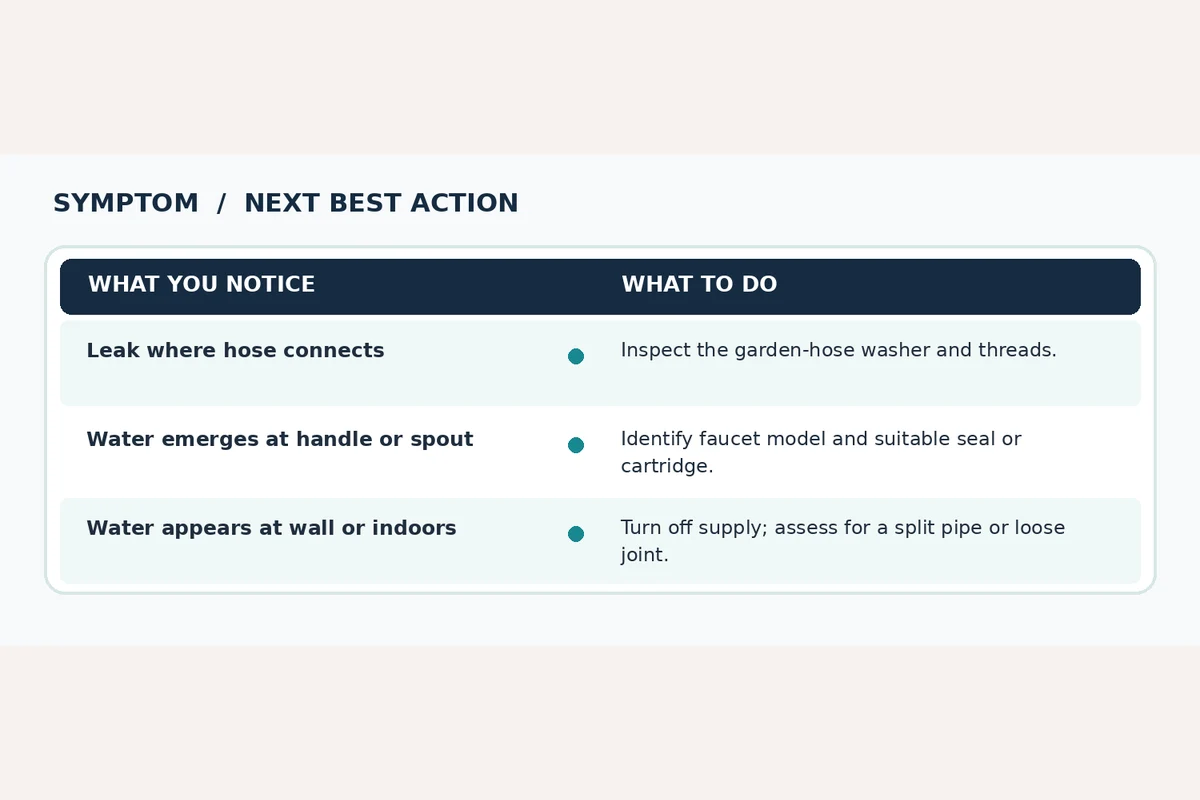
First remove the garden hose, then look carefully at where water escapes. A leak at the hose connection may need a new hose washer. Water from the handle may indicate a packing seal problem; steady dripping from the spout with the valve closed can indicate a worn internal washer or cartridge. Water escaping from the wall, after freezing weather, or only when the faucet runs may signal a concealed crack—shut off the supply and contact a plumber.
Before you begin: Before disassembling any faucet, locate and close the correct upstream shutoff valve; verify that water has stopped and relieve pressure. In freezing climates, a concealed split pipe can cause major damage. Do not loosen parts under pressure.
First, identify the problem
Use the position of the leak to avoid buying the wrong replacement part. If the faucet is a frost-free model, a long internal stem and specific parts may be required.
Step-by-step solution
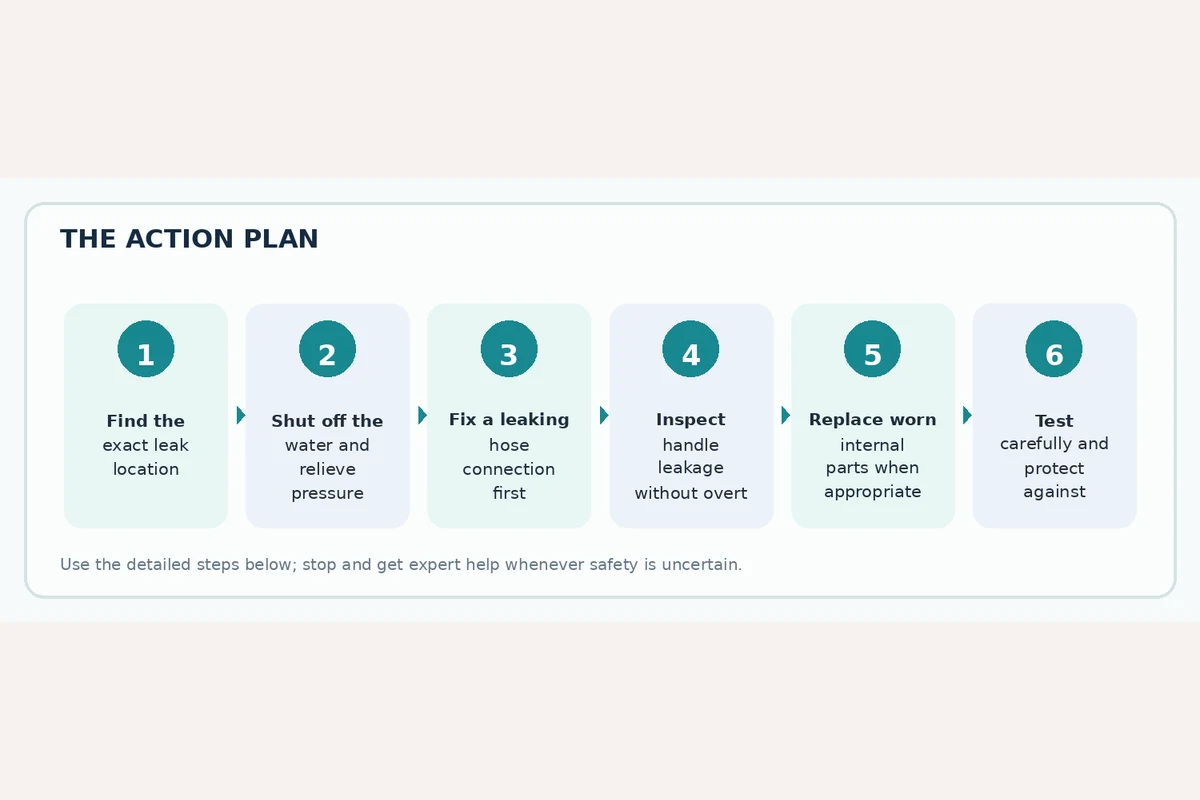
1. Find the exact leak location
Dry the faucet and nearby wall with a cloth, then reopen water only long enough to observe the leak safely. Note whether it occurs with the handle closed, while the faucet is running, or only with a hose attached. Photograph the faucet from the side and front. Check the wall on the other side for dampness or stains. A faucet that leaked after a freeze deserves particular caution because the pipe can split inside the wall.
2. Shut off the water and relieve pressure
Locate the dedicated indoor shutoff for the exterior faucet or close the main supply if necessary. Open the outdoor faucet briefly into a bucket to release remaining pressure, then turn it off. Make sure the fixture is no longer supplied with water before taking it apart. If you cannot identify the shutoff or see active flooding, do not improvise; turn off the main supply and call a licensed plumber.
3. Fix a leaking hose connection first
Unscrew the garden hose with the supply isolated and inspect the rubber washer inside the female hose end. A flattened, split or missing washer is a common source of spray and dripping. Replace it with the correct-size washer, inspect the threads and reconnect without cross-threading. Avoid excessive force, which can crack plastic fittings or damage threads. Test the connection only after the repair is fully reassembled.
4. Inspect handle leakage without overtightening
If water leaks around the handle spindle, identify whether the faucet uses a packing nut, a cartridge or another design. Some traditional faucets allow slight adjustment of the packing nut; excessive tightening can bind the handle and damage parts. If the seal is worn, obtain a matching replacement from the faucet manufacturer. Take the old component and model details to the hardware store if necessary. Do not try random washers in a specialty frost-free valve.
5. Replace worn internal parts when appropriate
For a conventional compression-style hose bib, a worn washer at the end of the stem may allow spout dripping. With water off and pressure relieved, follow the model’s manual to remove the stem and replace the correct washer or cartridge. Inspect the seat and threads for damage. Reassemble with manufacturer-approved components and avoid forcing corroded parts. If the body is cracked, replacement of the complete faucet is typically safer than attempting a seal-only fix.
6. Test carefully and protect against freezing
Restore water slowly and observe the handle, spout, hose connection and wall penetration. Open and close the faucet several times and inspect the indoor wall afterward. If moisture appears behind the wall, shut water off again. Before winter, disconnect hoses; follow local winterization requirements. Frost-free faucets can still freeze when a hose traps water, so proper hose removal and drainage remain important.
Common mistakes to avoid
- Replacing a hose washer when the water actually comes from a cracked pipe in the wall.
- Forcing corroded faucet nuts and snapping concealed piping.
- Working on the faucet without first shutting off the water supply.
- Leaving a hose connected through freezing weather.
- Assuming a frost-free outdoor faucet cannot be damaged by frost.
When to stop and get professional help
Call a plumber if water enters the wall, the faucet body is split, the shutoff does not stop flow, threaded parts are seized, or the installation requires cutting and soldering pipe. Also get help for repeated freezing problems; the fixture may be improperly installed or insulated.
Prevention and maintenance checklist
- Remove hoses before freezing conditions.
- Periodically inspect hose washers, threads and the handle for small leaks.
- Keep the wall penetration sealed against rain while allowing the assembly to drain correctly.
- Know where the outdoor faucet shutoff is before an emergency.
- After a hard freeze, check for hidden leakage the first time you use the faucet.
Frequently asked questions
Why does my faucet leak only when the hose is attached?
A missing or damaged hose washer, poor thread engagement or a split coupling is likely. Inspect the hose end before replacing the faucet.
Can I use Teflon tape on hose threads?
Garden-hose fittings typically seal with a washer, not the threads. Correct the washer or damaged coupling instead of relying on tape.
Why does a frost-free faucet leak indoors?
The long tube may have frozen and split, especially if the hose was left attached. Shut off the supply and arrange an inspection.
Is it worth repairing an old hose bib?
A minor washer or packing repair may be economical; significant body corrosion, damaged seats or an incorrect frost-free installation often justify professional replacement.
What to do next
If your repair stops the drip, take a photo of the finished connection and check it again after several days. If water reappears near the wall, shut off the supply and treat it as a possible concealed leak.
References and further reading
These primary sources support the safety, consumer-protection, or platform guidance in this article. Verify product manuals and local rules before acting.
Editorial note: General U.S. information, not individualized professional advice. Product models and local codes may differ. Images are original explanatory illustrations, not photographs of a specific product or job.