 Calculate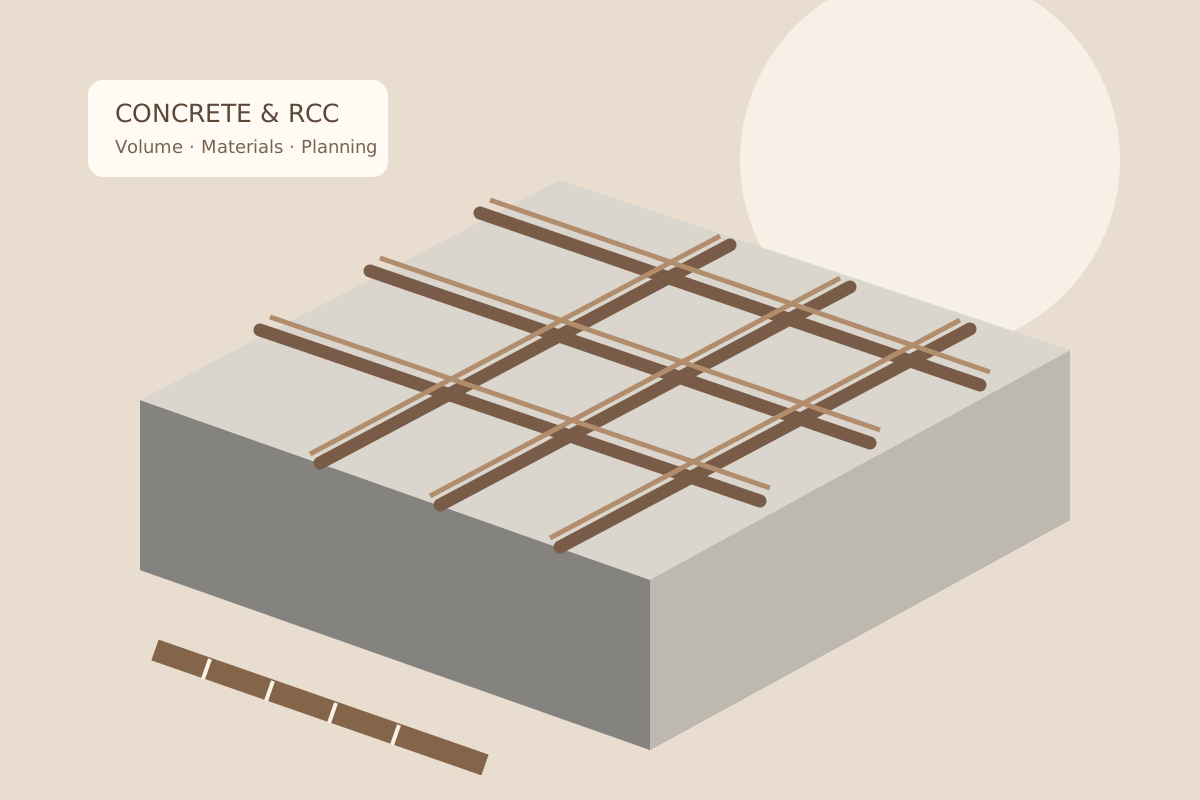
A concrete and RCC calculator helps you estimate concrete volume, cement, sand, aggregate and preliminary steel quantities before placing an order. But a useful estimate starts with the right measurements: square feet are not cubic feet, wet concrete volume is not loose dry-material volume, and a nominal mix ratio does not establish structural strength. These differences can turn a quick calculation into an expensive ordering mistake. This guide walks through a slab example, explains the settings in Calculate Simply, and shows how to work in cubic feet, cubic metres and US cubic yards. You will also learn where American ACI and ASTM standards fit into the process, which assumptions you should change for your project, and what information still needs an engineer or concrete supplier.
Concrete, PCC and RCC: what is the difference?
Concrete combines cementitious binder, water and aggregates. PCC commonly means plain cement concrete, while RCC commonly means reinforced cement concrete in South Asian building work. In the United States, reinforced concrete is the usual term; RCC can instead mean roller-compacted concrete. Tell your supplier which material you mean.
Reinforced concrete includes reinforcement designed for the member and its loading. A material estimator cannot select a safe slab thickness, bar spacing or beam size. Those decisions come from the structural drawings and applicable project requirements.
Choose the right concrete and RCC calculator
- Use the concrete volume calculator for rectangular dimensions and a volume allowance.
- Use the RCC slab material calculator for an entered volume and editable cement, sand, aggregate and steel assumptions.
- Use the RCC column material calculator or concrete footing material calculator for the corresponding work item.
- For a nominal plain-concrete estimate, open the 1:2:4 concrete mix calculator and check every setting.
Keep separate takeoff lines for slabs, beams, columns and footings. Avoid counting the same beam-and-slab intersection twice. The calculator labels describe estimating workflows, not approval to use a particular mix in a structural member.
How to calculate concrete volume in CFT, m³ and cubic yards
Concrete slab volume formula
Volume = length × width × thickness, with all three dimensions in the same unit.
Consider a rectangular slab measuring 20 feet by 15 feet with a specified thickness of 6 inches. Convert thickness first: 6 ÷ 12 = 0.5 feet. The geometric volume is 20 × 15 × 0.5 = 150 cubic feet. This example illustrates measurement only; it does not recommend a slab thickness.
| Quantity | Calculation | Result |
|---|---|---|
| Net volume | 20 × 15 × 0.5 | 150 ft³ |
| US cubic yards | 150 ÷ 27 | 5.556 yd³ |
| Cubic metres | 150 × 0.028316846592 | 4.248 m³ |
| Illustrative 5% volume allowance | 150 × 1.05 | 157.5 ft³ / 5.833 yd³ |
The 5% is an example, not a required American allowance. Discuss irregular excavation, pump arrangements, placement conditions and supplier order increments before deciding the final quantity. Do not multiply a ready-mix order by a dry-volume factor.
Cement, sand and aggregate calculation: a worked example
For an illustrative site-batched estimate, enter 150 CFT in the RCC slab tool. Retain a dry-volume factor of 1.54, nominal proportions of 1:2:4, and the template bag volume of 1.25 CFT. These are editable estimating assumptions, not an ACI-approved mix design or a guaranteed concrete grade.
Total mix parts are 1 + 2 + 4 = 7. The estimated loose dry volume is 150 × 1.54 = 231 CFT. Divide it proportionally:
| Material | Calculation | Base estimate |
|---|---|---|
| Cement | 231 × 1/7 ÷ 1.25 | 26.4 bags |
| Sand | 231 × 2/7 | 66 CFT |
| Coarse aggregate | 231 × 4/7 | 132 CFT |
With the tool’s separate default allowances of 5% cement, 25% sand and 15% aggregate, these become 27.72 bags, 82.5 CFT sand and 151.8 CFT aggregate. Whole-bag purchasing would round 27.72 up to 28. These defaults come from the estimating template; replace them with justified project allowances. They are not universal waste rates.
Why bag size and dry-volume settings matter
The template starts with a 50 kg cement bag and 1.25 CFT bag volume. Check both fields against your product. A packaged concrete mix containing aggregates is different from a bag of cement: for packaged concrete, use the manufacturer’s stated yield. Moisture, grading, batching and compaction also affect quantities, so keep the assumptions alongside your estimate.
RCC steel quantity: a budget estimate, not a bar schedule
The steel quantity calculator by concrete volume uses an editable steel-volume percentage and density. At 150 CFT, an illustrative 1% and 490 lb/CFT produce 735 lb before allowance. Using 2.20462262185 pounds per kilogram gives approximately 333.4 kg.
The workbook-compatible default is 2.22 lb/kg, which instead gives approximately 331.1 kg. Change that field when you want the exact unit conversion. Neither result determines the required reinforcement. Final procurement should follow an approved bar bending schedule covering bar diameters, lengths, laps, bends and other detailing.
American concrete standards: what ACI and ASTM actually cover
For US projects, use the code edition adopted by the relevant authority and the contract documents. A newer publication does not automatically replace the edition governing an existing project. The references below explain scope; this blog does not reproduce copyrighted standards or provide a compliance checklist.
- ACI CODE-318 addresses structural concrete materials, design and detailing. ACI publishes the 2025 edition; confirm the project’s governing edition.
- ACI SPEC-301 provides concrete construction specifications for use with project requirements.
- ASTM C94/C94M covers ready-mixed concrete. ASTM C39/C39M concerns compressive testing of cylindrical specimens; ASTM C143/C143M concerns slump testing.
These standards serve different purposes. Slump describes consistency; it does not by itself verify compressive strength. A nominal 1:2:4 ratio cannot establish compliance with a specified strength. Ask the designer and producer for the required strength, exposure requirements, mix documentation and testing arrangements. Our quantity calculators do not certify ACI or ASTM compliance.
Build a realistic concrete cost estimate
For ready-mix, multiply the confirmed order volume by a current local quotation, then separately include delivery, minimum-load charges, pumping, placement, testing and other applicable items. For site batching, price the material quantities in matching units and include labour, plant and handling. Reinforcement, formwork and curing costs need their own lines.
Save the quote date, currency, unit rates and tax treatment. The same concrete volume can have very different costs in Pakistan, Saudi Arabia or the United States. A quantity estimate is useful worldwide; a single universal price is not.
Frequently asked questions
How much concrete do I need for a slab?
Multiply length, width and thickness in one unit. A 20 ft × 15 ft × 6 in slab contains 150 ft³, or about 5.556 yd³, before a justified ordering allowance.
Can a concrete calculator tell me the concrete strength?
No. Volume and nominal ingredient proportions do not establish compressive strength. Use the specified mix requirements, supplier documentation and appropriate testing.
Is RCC the same as reinforced concrete in America?
In South Asian building work RCC usually means reinforced cement concrete. In US practice RCC can mean roller-compacted concrete, so use the full material description when ordering.
Should I use 1.54 to order ready-mix concrete?
No. That factor is a loose dry-material estimating assumption for ingredient calculations. Ready-mix is ordered by delivered concrete volume, with any ordering allowance assessed separately.
Start with a measured volume
Measure the work, confirm the units and decide whether you need delivered concrete volume or separate ingredient quantities. Then review the assumptions before pricing anything. Calculate your concrete volume or open the RCC slab calculator to build your estimate. If a setting is unclear, contact Calculate Simply with the tool name and your measurements.
Editorial note: examples use the current Calculate Simply estimating model. Standards references were checked on 18 October 2026. Structural design and project approval remain with the responsible professionals.